USDA soil data · Dallas
The ground under Dallas swells and shrinks enough to crack a foundation
We pulled USDA soil-survey ratings for Dallas and scored two things that wreck foundations and basements: how much of the ground is expansive clay that moves with the seasons, and how much of it drains slowly and holds water against the wall.
83% of the ground sampled in Dallas is high shrink-swell clay.
What this means if you own a home in Dallas
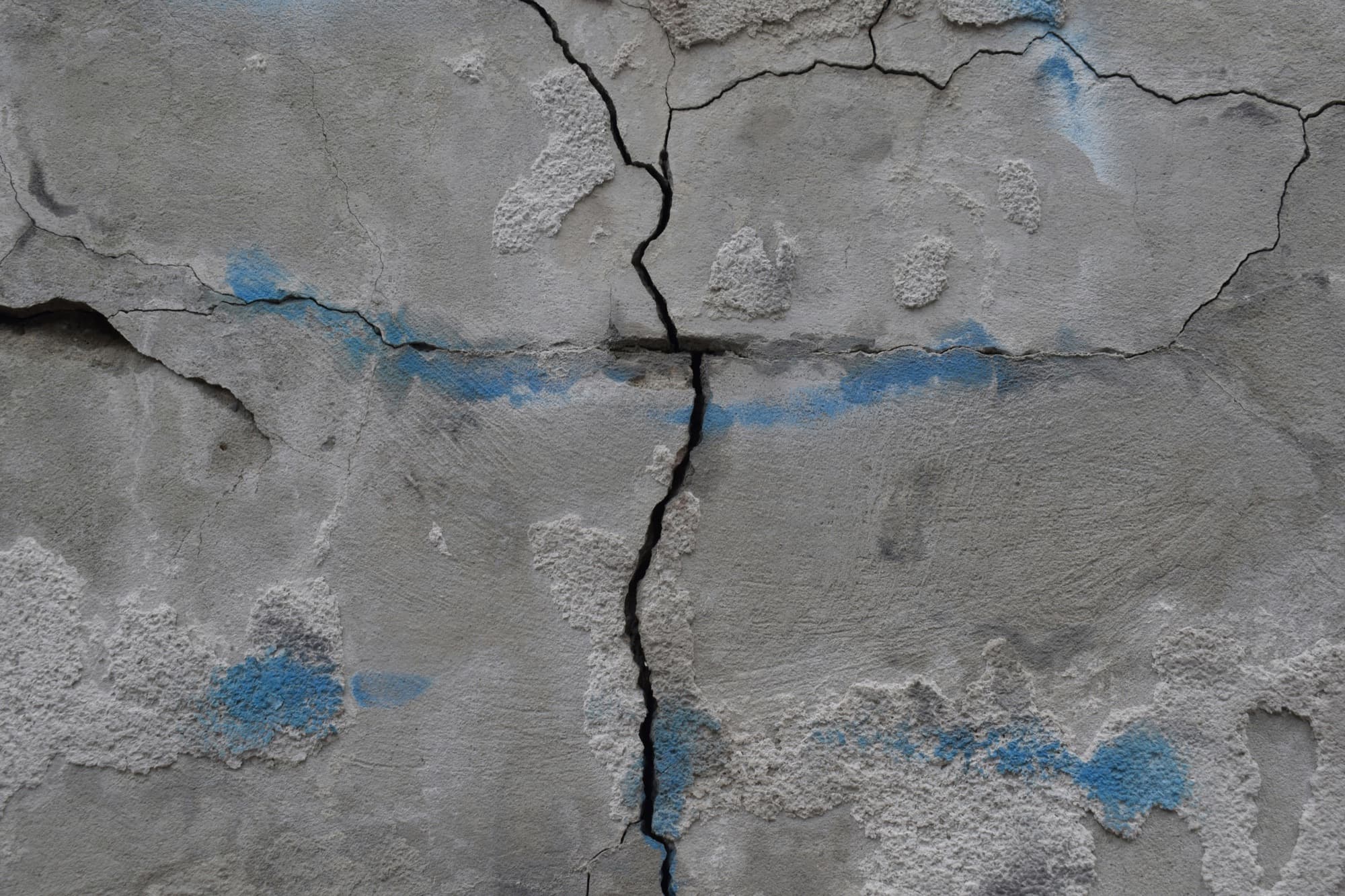
Your home is sitting on ground that changes size. Expansive clay swells when it soaks up water and shrinks back as it dries out, and it does that every wet season and every drought. That movement is the number-one cause of foundation damage in the country, and it shows up as stair-step cracks in brick, doors and windows that start to stick, gaps opening at the corners of the house, and sloping floors.
None of this is covered by a standard homeowners policy, earth movement and seepage are both excluded, so the cost of catching it early or letting it spread is entirely on you. The fixes are known and routine: proper grading and gutters to keep water off the soil, foundation drainage and waterproofing, and for active movement, piering or wall stabilization. The earlier a pro looks at it, the cheaper it stays.
The ground under Dallas, from the survey
USDA maps Dallas as mostly Trinity soil (Trinity-Urban land complex, 0 to 1 percent slopes, occasionally flooded). Here is how the 12 rated sample points break down.
10 of 12 rated points are high shrink-swell, peaking at 17% linear extensibility. Above 6% is where clay moves enough to threaten a foundation.
0 of 12 rated points drain slowly (hydrologic groups C and D), so water tends to pool and press against foundation walls rather than soak away.
Read the low numbers carefully
This rates the soil, the top meter or so of ground. Where the expansive material is deep claystone bedrock below the soil, like the Pierre Shale under the Colorado Front Range, the soil-level number reads low even though the ground moves plenty. So a low clay score here is not proof of stable ground, only that the shallow soil is not the problem.
These are 17 sample points across Dallas, not your specific lot. Soil varies block to block. Treat this as the odds for the area, and get your own ground looked at before you decide.
Where this comes from
Source is USDA NRCS SSURGO, the national soil survey. We sampled the dominant soil component on a grid across Dallas and read its linear extensibility (LEP, the shrink-swell measure) and hydrologic drainage group. A point counts as high shrink-swell at LEP of 6% or more in the top 100cm. The dominant soil series held across 200% of sampled points.
Free to cite or reproduce with a link to this page (CC BY 4.0).
Dallas soil and foundations: FAQ
Is Dallas built on expansive clay?+
Yes, in part. 83% of the ground USDA sampled across Dallas rates as high shrink-swell clay, and the worst point measured 17% linear extensibility. That clay swells when it gets wet and shrinks as it dries, and the movement cracks foundations from below.
Why is my foundation cracking in Dallas?+
The two usual culprits are the ground itself. Expansive clay heaves and drops a foundation as it swells and shrinks with the seasons, which shows up as stair-step cracks in brick, sticking doors, and gaps at the corners. Slow-draining soil holds water against the wall until it finds a crack. Dallas shows high clay movement and low drainage risk, so both are worth an inspection.
Does homeowners insurance cover foundation damage from soil in Dallas?+
Almost never. Standard homeowners policies exclude damage from earth movement and settling, which is exactly what expansive clay causes. That means prevention and early repair are on you, which is why catching it before it spreads matters.
Use this data