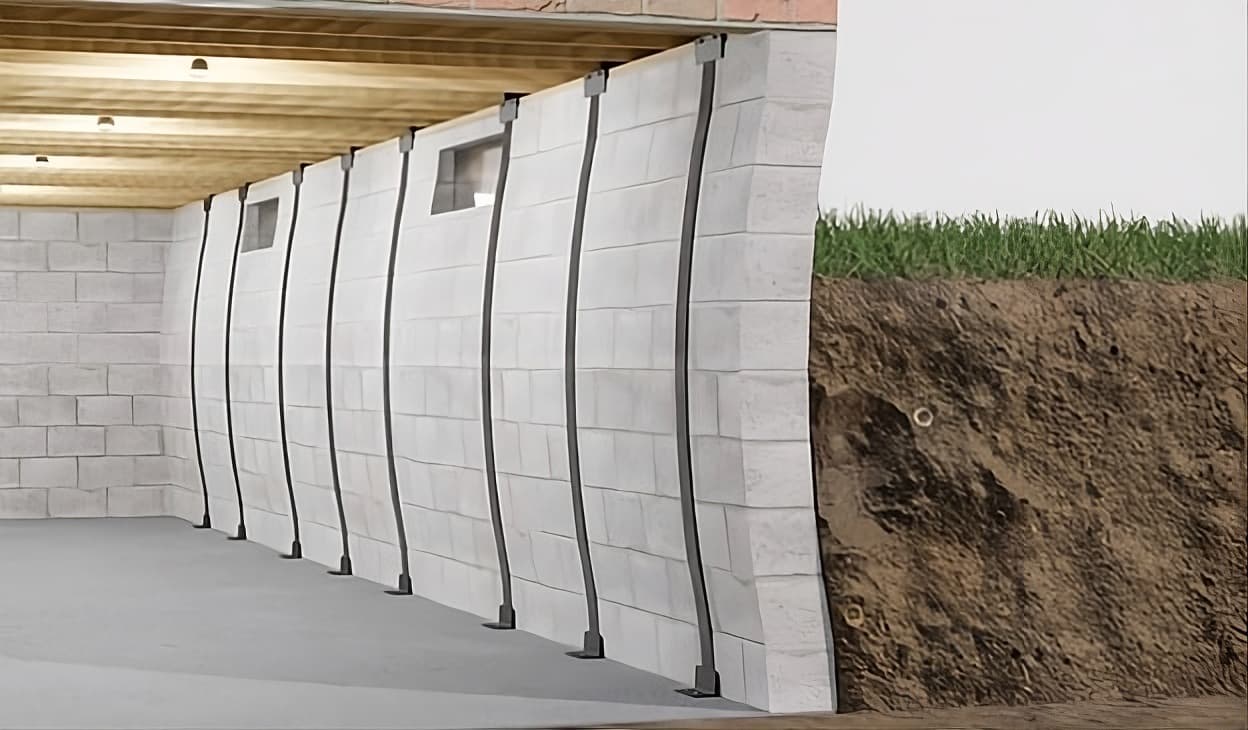
A basement wall that curves inward is one of the clearer signs of foundation trouble, and it is worth understanding before you get a quote. Bowing means the wall is losing the fight against the soil pushing on it. The question is how far it has gone and what it will take to stop it.
The short answer
Why walls bow inward
The force behind a bowing wall is lateral soil pressure pushing on the outside of the foundation. Three things drive it, and they often stack:
- Saturated soil. Wet soil is heavier and presses harder against the wall, which is why poor drainage and bowing walls travel together.
- Expansive clay. Clay soils swell dramatically when they take on water and shrink back as they dry. That repeated movement works on the wall season after season.
- Freeze-thaw. Where winters are cold, water in the soil freezes and expands against the wall, then thaws, over and over.
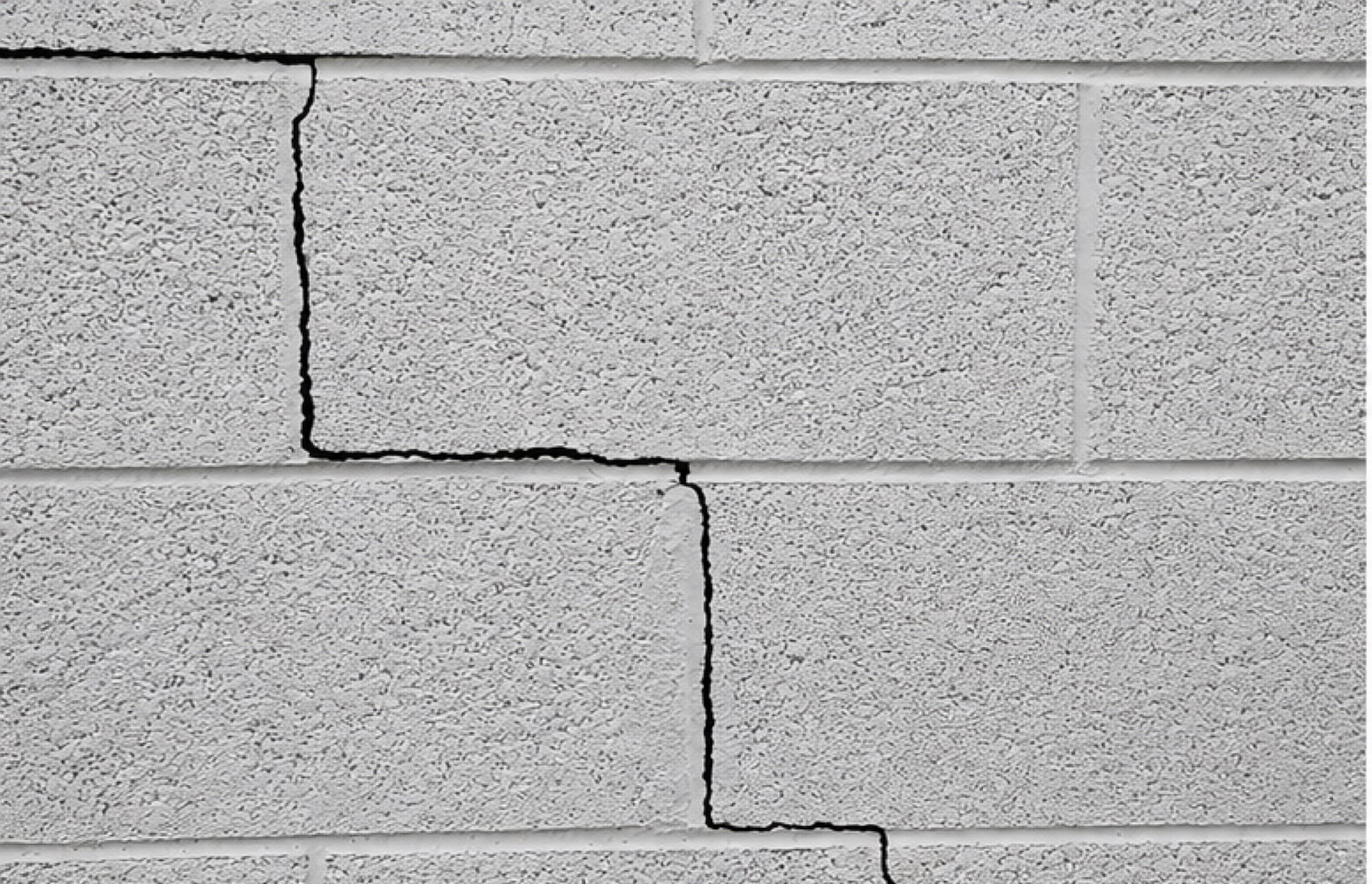
Over years, block walls in particular begin to bow at the middle and crack along a horizontal line about where the soil pressure peaks.
How to judge the severity
A useful rough guide is how far the wall has moved:
- Under an inch, not changing: often stable, and can usually be reinforced rather than rebuilt.
- Two inches or more, or a clear horizontal crack: a more urgent structural problem.
- Shearing at the bottom course, or movement you can track over months: get a specialist out sooner rather than later.
A simple way to monitor it yourself: take a photo of the wall against a straightedge or a plumb line, and repeat it monthly. If the gap is growing, the wall is still moving and the clock matters.
Repair methods that hold
Carbon fiber straps
For mild to moderate bowing that is stable, high-strength straps bonded vertically to the wall resist further movement. Clean, low-profile, no excavation, and they can be hidden behind finished walls. They hold a wall where it is; they do not pull it back.
Wall anchors
Steel anchors connect the wall to plates set in the soil out in the yard, and can be tightened over time to hold the wall or slowly draw it back toward straight. A good option for more significant bowing when there is yard access to place the plates.
Steel or beam bracing
Vertical steel I-beams braced against the floor slab and the floor framing above resist the load from inside. Often used where there is no exterior access for anchors.
Rebuilding
A wall that has failed outright may need to be taken down and rebuilt, the most involved and expensive option. It is almost always paired with fixing the drainage that caused the pressure, because rebuilding into the same wet, shifting soil invites the problem straight back.
Fix the water, not just the wall
Bowing is a symptom of pressure, and pressure is usually about water in the soil. Reinforcing the wall without improving drainage leaves the cause in place, and the reinforced wall then fights the same load indefinitely. Pairing structural repair with better exterior drainage, and often an interior drain and sump, is what makes the fix last. See our guide to foundation warning signs for the other symptoms worth watching, and our wet basement guide for the drainage side.
Getting a price
For local ranges by method and city, see our foundation repair cost report, or pick your city below to get matched with local specialists.