French drains and sump pumps get compared as if you have to choose one, but they solve different halves of the same problem. A French drain collects water and moves it; a sump pump lifts water out when it cannot drain away on its own. Understanding the split makes it clear why many wet basements need both.
The short answer
How a French drain works
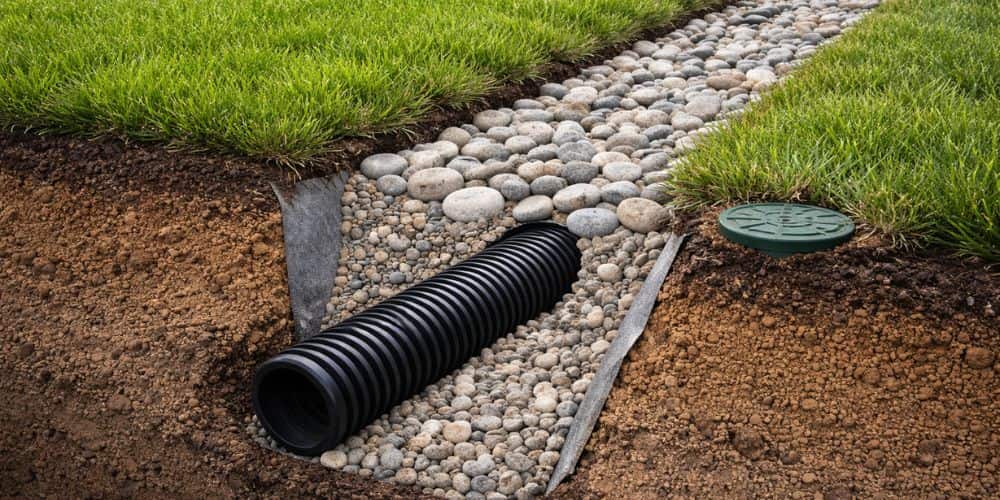
A French drain is a gravel-filled trench with a perforated pipe at the bottom. Water in the soil seeps into the pipe and flows away from the foundation. It can run around the exterior of the house or along the interior perimeter of the basement floor. Its job is to intercept groundwater before it builds pressure against the wall. What it needs is somewhere to send that water.
How a sump pump works
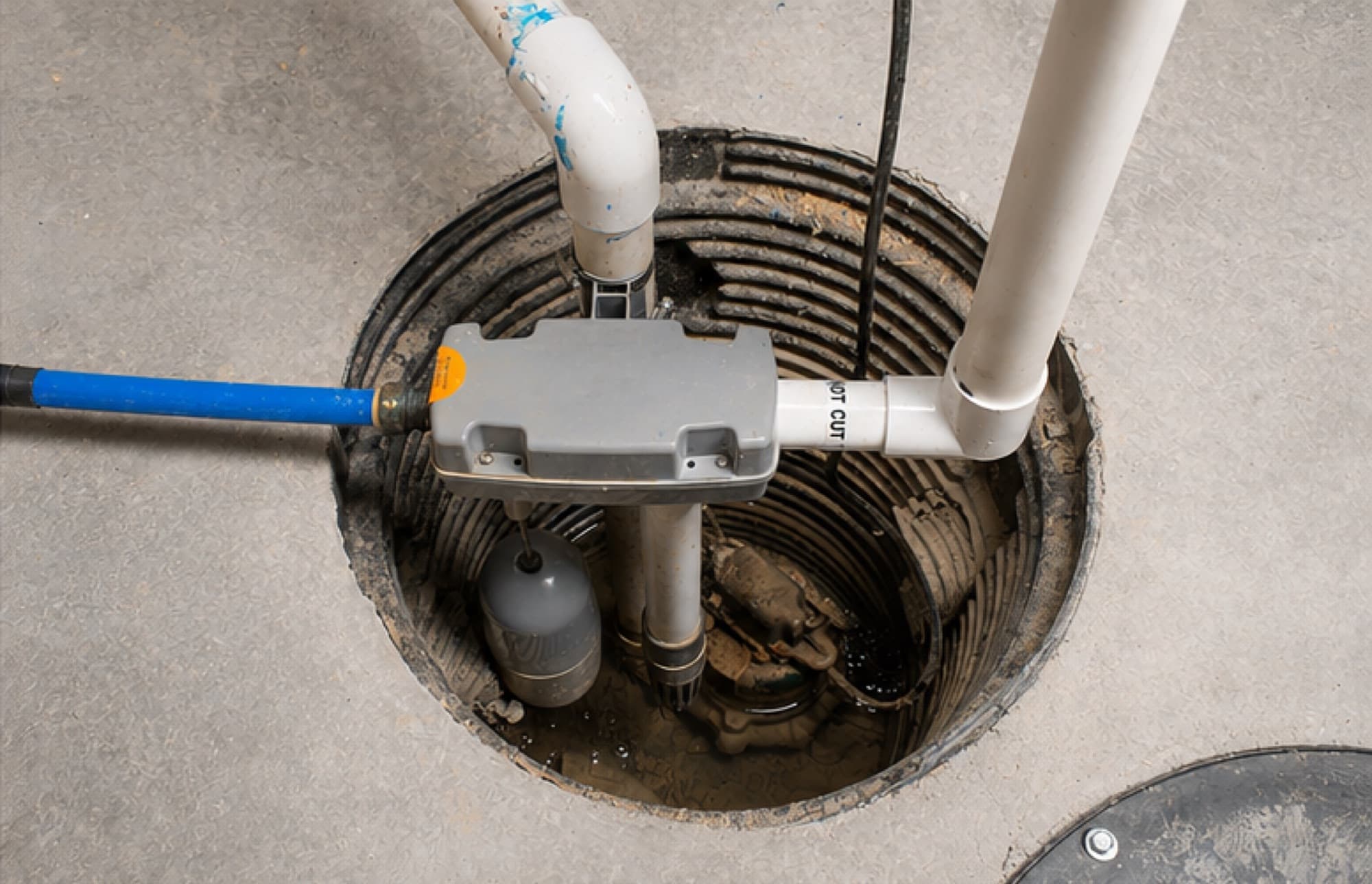
A sump pump sits in a pit at the low point of the basement. Water collects in the pit, a float switch turns the pump on, and it pushes the water out through a pipe to a safe distance from the house. The sump pump is the muscle: it moves water uphill and out when gravity alone will not.
| French drain | Sump pump | |
|---|---|---|
| What it does | Collects groundwater and carries it away from the foundation. | Lifts collected water out of the basement and away from the house. |
| Where it sits | A gravel trench with a perforated pipe, around the exterior or along the interior floor perimeter. | A pit at the lowest point of the basement floor. |
| Moves water by | Gravity. It needs somewhere lower to drain to. | A powered pump. It can move water uphill and out. |
| Best when | The lot slopes away and water can discharge downhill. | The lot is flat, or the water table sits above the floor. |
| Maintenance | Can silt up or clog with roots over years. | Moving parts and a float switch, roughly a 7 to 10 year life. Test it and add a battery backup. |
Why they work together
On a sloped lot, a French drain can often discharge downhill by gravity with no pump at all. But on a flat lot, or where the water table sits above the basement floor, the collected water has nowhere lower to go. That is where the pair becomes one system: the drain gathers the water and feeds the sump pit, and the pump evacuates it. This combination is the standard fix for hydrostatic pressure and a chronically wet basement.
Which one you need
The right answer comes down to two things: where the water shows up, and whether your lot gives collected water somewhere lower to go.
- Water after rain, and a lot that slopes away: a French drain or improved exterior drainage may be enough on its own, discharging downhill by gravity with no pump.
- Water rising through the floor or the wall-floor joint: that is hydrostatic pressure. Plan on a sump pump, and usually a drain to feed it.
- A flat lot, or a high water table: the collected water has nowhere lower to drain to, so a pump is not optional.
When in doubt, a specialist can test your grade and water table and tell you which the site actually calls for. Our guide to why basements get wet can help you narrow the cause first.
Maintenance neither of them escapes
Both systems are install-and-forget until the day they are not. A French drain can silt up or clog with roots over years and stop carrying water. A sump pump has moving parts, a float switch that can stick, and a working life of roughly seven to ten years. Test the pump by pouring a bucket of water into the pit and confirming it kicks on, and clear the discharge line where it exits so it is not blocked or frozen.
Getting a price
Cost comes down to the length of drain run, the depth, and how easy the area is to access, plus the pump and any backup. For local ranges, see our basement waterproofing cost report. A sump pit or interior drain is also the kind of work that can require a plumbing or building permit depending on the city; the verified authority for yours is in our permit fee report. Or choose your city in the sidebar to get matched with contractors who install both.