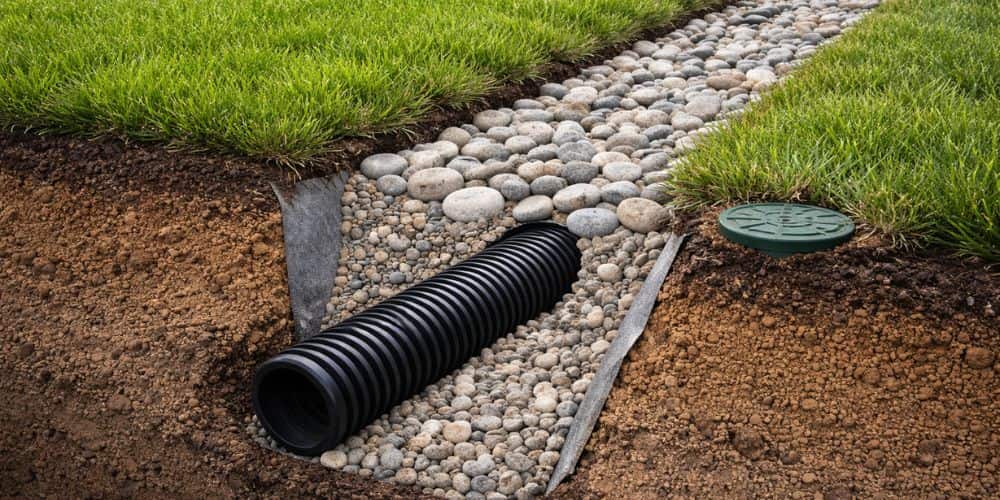
A French drain is one of the most effective ways to keep groundwater off a foundation, and its cost swings widely depending on whether it runs inside the basement or outside around the footing. Here is what sets the price, and how to figure out which type your lot actually needs.
The short answer
What drives the cost
- Interior vs exterior. Exterior drains require excavating around the foundation; interior drains are cut into the floor. The digging is the biggest single cost difference.
- Length and depth. Priced per running foot, a full perimeter costs more than one problem wall, and deeper trenches cost more.
- Where the water goes. A gravity discharge to daylight is cheap; needing a sump pit and pump adds to the job.
- Restoration. Replacing concrete, landscaping, or a driveway disturbed by the work is real money on exterior installs.
Which type do you need?
If water is already coming in at the basement wall-floor joint, an interior perimeter drain feeding a sump pump is the common, lower-cost fix. If the goal is to stop water reaching the wall from outside, or you are already excavating for exterior waterproofing, an exterior footing drain makes sense. On a high water table the sump pump matters most, because no drain lowers groundwater on its own; see how deep the water table rises in your city.
Still deciding between drainage approaches? Our French drain vs sump pump and interior vs exterior waterproofing guides break down what each fixes. For local pricing and matched contractors, see French drain costs by city.